
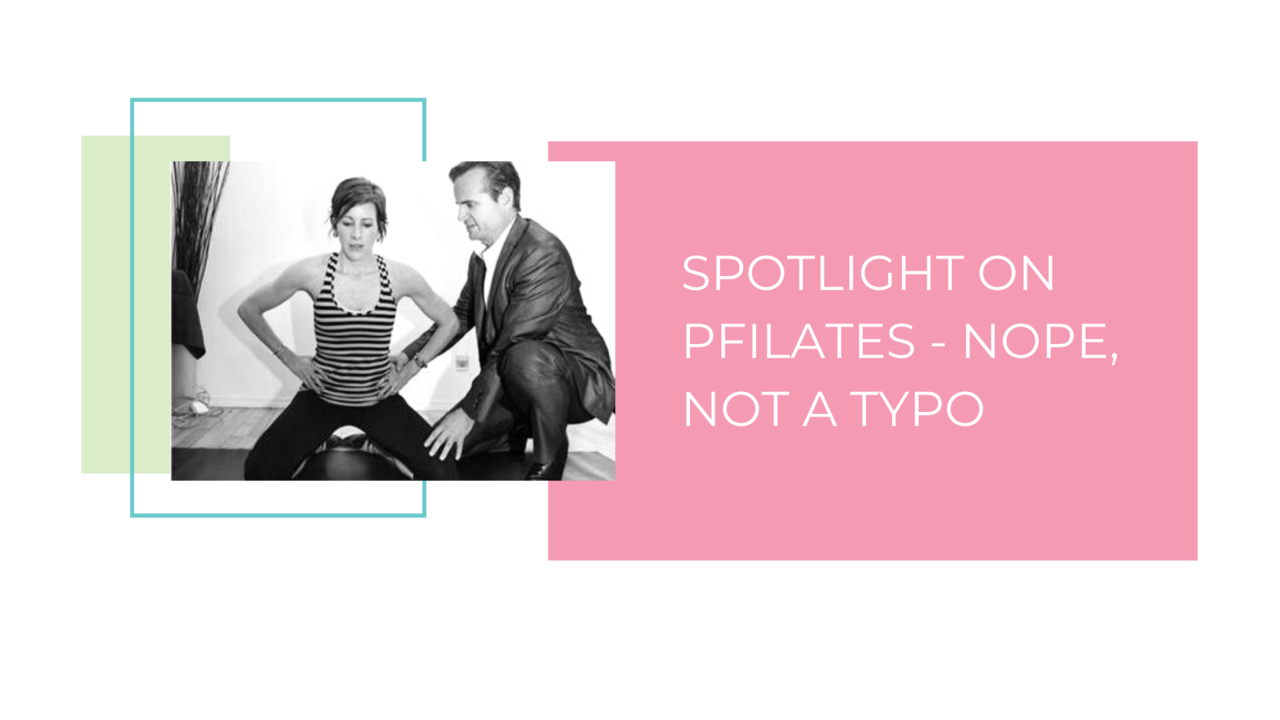
Spotlight on PFILATES - NOPE, not a Typo
Jan 07, 2020
By Kim Vopni, The Vagina Coach — Certified Pelvic Floor Fitness Specialist · Published January 7, 2020
Direct Answer
Pfilates — short for Pelvic Floor Pilates — is a pelvic floor training program created by urogynecologist Dr. Bruce Crawford that layers a voluntary kegel onto the ten movements that recruit the pelvic floor the most. Adding that contraction at each movement’s point of peak engagement increases pelvic floor activation, so your muscles get stronger during movement, not just while sitting still.
Key Takeaways
- Pfilates stands for Pelvic Floor Pilates — not a typo — and was developed by urogynecologist Dr. Bruce Crawford.
- Dr. Crawford tested more than 120 fitness, yoga and Pilates movements with wireless EMG to find the ten that recruit the pelvic floor the most.
- Adding a voluntary kegel at the point of peak engagement increases pelvic floor activation beyond the movement alone.
- Each move combines repetitions for coordination, a static hold for endurance (slow-twitch fibres) and quick pulses for strength (fast-twitch fibres).
- Learn to contract and relax your pelvic floor correctly first, ideally with a pelvic floor physiotherapist, then layer Pfilates on top.
Pelvic Floor Pilates
Pfilates (no, that is not a typo) is a great program to help train your pelvic floor. When you add in core breathing, you have a fantastic way to improve and maintain a stronger pelvic floor for life.
We want our pelvic floor to be functional during times of rest and during movement; the beauty of the Pfilates program is that it does just that, it blends kegels with movement to give women more bang for their pelvic floor fitness buck!
Pfilates is Pelvic Floor Pilates and was developed by urogynecologist Dr. Bruce Crawford (that's him in the photo along with yours truly doing one of the movements called The Hover). He was tired of telling women to go home and do their kegels, only to see them in his operating room not long after.
Kegels, when performed correctly, are effective but are often done seated or standing which doesn’t help much when the problems we encounter, such as leaking, usually happen during movement.
Dr. Crawford knew there had to be a better way. He examined over 120 fitness, yoga and pilates movements using wireless EMG that looked at the activation of the glutes, the inner thighs, the deep abdominals and the pelvic floor during each exercise.
He was looking to see which movements incorporated the pelvic floor the most as part of a group of co-contracting muscles. He then looked to see at which point in the movement the pelvic floor was most engaged (he calls this peak engagement).
He asked his subjects to add a voluntary contraction of the pelvic floor (a kegel) to that point of peak engagement and what he was hoping he would see is was what he found - by adding a voluntary contraction of the pelvic floor when it was already partially engaged in an exercise, the activation of the pelvic floor became even greater!
The Pfilates program is made up of the top 10 movements which recruit the pelvic floor the most. These movements are done in a series of repetitions to help build coordination, a static hold at the point of peak engagement to build endurance and to train the slow-twitch muscle fibres and then quick pulses (contracting and relaxing the pelvic floor quickly) to build strength and to train the fast-twitch muscle fibres.
Sounds a bit more effective than just sitting at a red light and doing what you think are kegels doesn’t it?
The Pfilates program is easy to follow, effective, and most movements are ones you are either currently doing in your workouts or have done in the past. This makes incorporating them into your fitness routine simple!
My Favourite Pfilates Move
Let’s break down one of my favourite pfilates moves – The Bridge.
The point at which the pelvic floor is most engaged in this exercise is at the top of the bridge. This is where you will do the static hold and the quick contract/release pulses.
Start by lying on your back with your knees bent and your feet on the floor. Place a small ball between your thighs to help activate the inner thigh muscles which co-contract with the pelvic floor (note I said co-contract – they should work together with your floor, not do the work your floor should be doing). Your pelvis should be neutral with a small space between your low back and the floor.
You are going to add in the core breath to this move - Inhale to expand to prepare, and then exhale to engage your pelvic floor and then press your hips up while gently squeezing the ball between your thighs. Inhale as you lower back down.
Repeat five times and then on the sixth repetition hold at the top of the bridge keeping the pelvic floor engaged and a gentle squeeze on the ball for five seconds. Continue to breathe.
Inhale and lower your hips down slightly (your pelvic floor should relax as you do this) and then quickly contract your floor again as you exhale and press your hips back up. Do five quick contract/relax repetitions and then lower down all the way.
Done! It will take some time for this to feel coordinated and smooth but stick with it. It is an amazing butt exercise, a wonderful pelvic floor exercise and it also brings in the inner thighs – how’s that for a multitasking exercise!
To make this program most effective, first visit a pelvic floor physiotherapist and learn to contract your pelvic floor properly. Spend a few days practicing and perfecting the core breath with this newfound awareness of what a pelvic floor contraction and relaxation (aka a kegel) feels like.
Then when adding this to the Pfilates program you have a recipe for pelvic floor fitness success!
Check out our programs:
Kegel & Pelvic Floor Exercise Programs
The Buff Muff App
The Buff Muff App will help you finally get clarity on the elusive kegel and teach you how to activate your pelvic floor appropriately and then add it to movement. There is a ton of free content available to anyone who downloads the app including a 7-day pelvic floor fitness challenge to introduce you to the concept of a whole-body fitness approach to pelvic health. Once the free challenge ends you have the option to join the membership for ongoing support from me, your very own vagina coach.
Download on Android or iPhone below:


Frequently Asked Questions
What is Pfilates? Pfilates is short for Pelvic Floor Pilates, a program developed by urogynecologist Dr. Bruce Crawford. It pairs the ten movements that recruit the pelvic floor most with a voluntary kegel added at each movement’s point of peak engagement.
Is Pfilates the same as regular Pilates? No. Regular Pilates trains whole-body core control, while Pfilates uses a specific set of EMG-tested movements and layers a deliberate pelvic floor contraction into each one, so the goal is pelvic floor strength and coordination.
How were the Pfilates movements chosen? Dr. Crawford tested more than 120 fitness, yoga and Pilates exercises with wireless EMG, measuring glute, inner thigh, deep abdominal and pelvic floor activity, then kept the ten movements that recruited the pelvic floor the most.
Why is Pfilates better than seated kegels? Leaking and heaviness usually show up during movement, so training the pelvic floor only while seated or standing still does not match real life. Pfilates trains the contraction inside movement patterns you already use.
Do I need equipment to do Pfilates? Very little. A mat and a small ball are enough for moves like The Bridge, where the ball encourages the inner thighs to co-contract with the pelvic floor.
Should I see a pelvic floor physiotherapist before starting Pfilates? Yes. A pelvic floor physiotherapist can confirm you are contracting and relaxing your pelvic floor correctly, which makes every Pfilates repetition more effective.
How does the core breath fit with Pfilates? Inhale to expand and prepare, then exhale to engage your pelvic floor as you move. Pairing the core breath with each Pfilates move builds coordination and makes the contraction more automatic.

Kim Vopni, known as The Vagina Coach, is a certified fitness professional, menopause support practitioner, women’s health educator, and author specializing in pelvic floor health. For over 15 years she has helped women worldwide address issues like incontinence, organ prolapse, pelvic pain and core dysfunction through fitness and education. Kim is the creator of the Buff Muff Method and founder of Pelvienne Wellness Inc., and co-founder of Buff Muff Wellness Inc where she provides online programs, in person professional teacher training, and other resources designed to help women build lifelong pelvic health.
- Creator of the Buff Muff Method™
- Founder of Pelvienne Wellness Inc.
- Co-Founder of Buff Muff Wellness Inc.
- Creator of Kegels & Cocktails™
- Certified fitness professional specializing in pelvic health
- Certified Menopause Support Practitioner
- Author of multiple books on pelvic floor health
- Speaker and educator featured on prominent media, podcasts and health platforms
Related Reading:
Effective Kegel Exercises for Incontinence
Pack a Punch with Kegels and Movement Exercises
Pelvic health is not just about Kegels
Cues To Help you Connect with your Core & Pelvic Floor
Pelvic Floor Physio - JUST DO IT!
If you enjoyed this article, you might also like our episode:
Top Pelvic Health Tips With Dr Sara Reardon
Listen to the episode


