
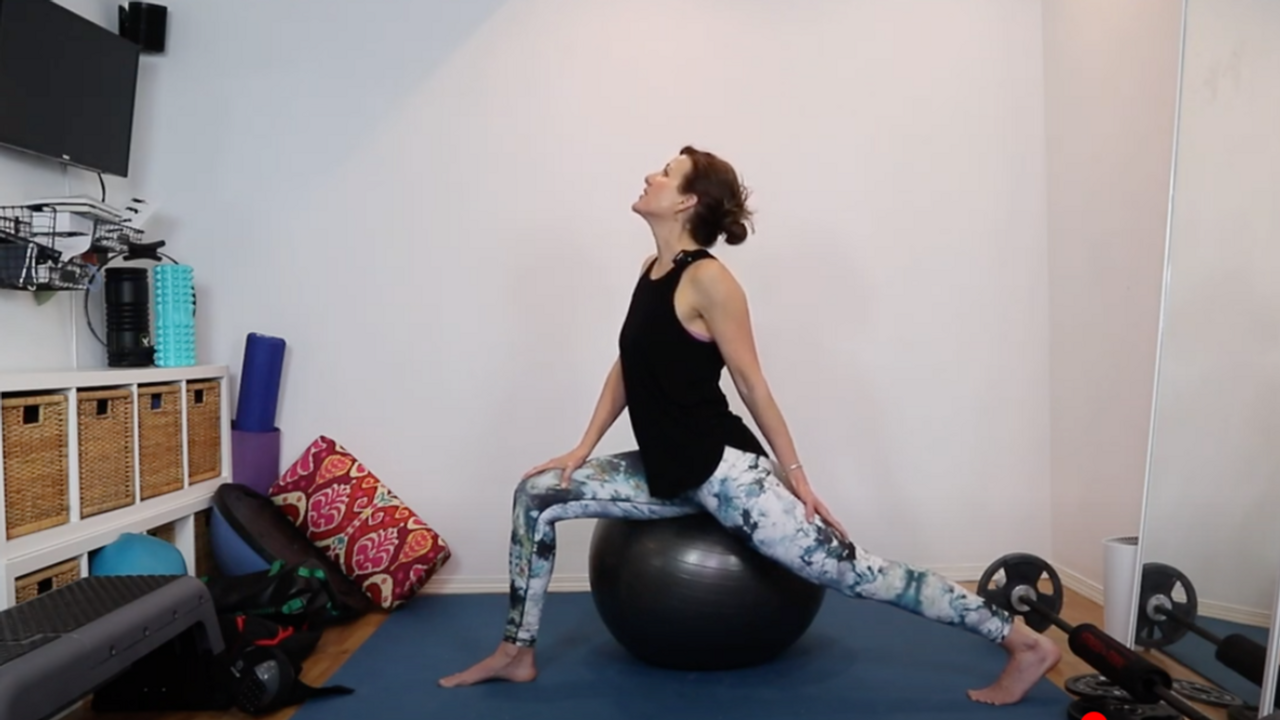
Fanny Fitness - Lengthen and Strengthen with Balls
Mar 16, 2022By Kim Vopni, The Vagina Coach — Certified Pelvic Floor Fitness Specialist · Published March 16, 2022
Direct Answer
Pelvic health is a balance between effort and ease — the pelvic floor needs to both lengthen and strengthen. It often helps to lengthen first, releasing tension so the muscles can contract fully and move through their full range, then strengthen, and lengthen again at the end. In this workout, Kim Vopni coordinates the Core Breath with movement using a p.ball and a stability ball to support incontinence, prolapse, and overall pelvic health.
Key Takeaways
- Pelvic health is a balance between effort and ease: the pelvic floor needs to both lengthen (release) and strengthen.
- Lengthening first can clear tension that interferes with the muscles’ ability to contract fully and move through their full range of motion.
- The workout connects to the pelvic floor with the Core Breath, then coordinates that into movement using a p.ball and a stability ball.
- Fitness and movement can help prevent and overcome pelvic floor challenges like incontinence and organ prolapse.
- The approach also supports women through pregnancy, motherhood, and menopause, finishing with lengthening for the pelvic floor, hips, and inner thighs.
Pelvic health is a balance between effort and ease.
We need to lengthen and strengthen. I often lengthen first to get rid of the tension that may interfere with the ability of the muscles to contract fully and move through their full range of motion but it is also nice to lengthen and release at the end of the work.
I use fitness and movement to help women and vagina owners prevent and overcome pelvic floor challenges like incontinence and organ prolapse.
Incontinence is any unwanted loss of urine at any time and any amount. So, if you are not sitting on the toilet, wanting to go pee and urine comes out of you, that would be termed "incontinence."
Organ Prolapse is the descent and eventual protrusion of an internal pelvic organ through the vagina or anus.
You can read more about my surgery on my blog.
My exercise programs also help women during pregnancy, motherhood, and menopause.
In the following workout, we will start by connecting to the pelvic floor with the core breath and then coordinate that into movement. I am using the p.ball from pvole (this is an affiliate link) and my stability ball.
At the end of the work, we focus on lengthening the pelvic floor and hips and inner thighs.
Please make sure to LIKE and SHARE the video and Subscribe to my Channel for the best fitness and well advice south of your belly button!
More Resources:
- The Best Core Exercise Blog
- Pregnancy Fitness Blog
- Helping Heal your Postpartum Body
- Menopause Belly Happens
Other Programs:
The 28-Day Challenge and Buff Muff Membership
I recommend checking out my comprehensive pelvic health education and fitness programs on my Buff Muff App. The most complete Pelvic Floor & Kegel exercise App to strengthen the pelvic floor.
The Buff Muff 28-Day Challenge (housed in the App) gets you started, and the Annual membership keeps you progressing so you can laugh, run, jump, and lift without the pesky leaks and annoying discomfort of prolapse symptoms.
Frequently Asked Questions
Why does the pelvic floor need to lengthen as well as strengthen?
Pelvic health is a balance between effort and ease. A pelvic floor that is only ever tightened can become tense, which interferes with its ability to contract fully and move well. Lengthening and releasing alongside strengthening keeps the muscles working through their full range.
What does it mean to lengthen or release first?
Lengthening first means releasing tension before you strengthen. Kim often starts there to clear tension that may prevent the muscles from contracting fully and moving through their full range of motion, then finishes the work with more lengthening and release.
What equipment is used in this workout?
The workout uses a p.ball from pvole (an affiliate link) and a stability ball. These props help you connect to the pelvic floor and coordinate breath with movement, and can be swapped for similar equipment you may already have.
What is the Core Breath?
The Core Breath is a way of connecting to your pelvic floor through your breathing. In this routine you begin with the Core Breath and then coordinate it into movement, which helps the pelvic floor work together with the rest of the core.
Can these exercises help with incontinence and prolapse?
Yes. Kim uses fitness and movement to help women prevent and overcome pelvic floor challenges like incontinence — any unwanted loss of urine — and organ prolapse, the descent of a pelvic organ into the vagina. Coordinated movement supports both.
Is this workout suitable during pregnancy or menopause?
Yes. Kim’s exercise programs are designed to support women through pregnancy, motherhood, and menopause. As always, work within your comfort level and check with your provider if you have specific concerns or a recent diagnosis.
Related Articles
- The Best Core Exercise You Are Probably Not Doing
- Release Exercises for Pelvic Floors That Are Too Tight
- Your Core and Pelvic Floor
- Pelvic Health Is Not Just About Kegels
- Prolapse Safe Planks and Push-ups
If you enjoyed this article, you might also like our episode:
Weights, Wands and Other Vagina Self Care Tools
Listen to the episode


